Why Your Feed Is Full of People Starring in Videos They Never Filmed
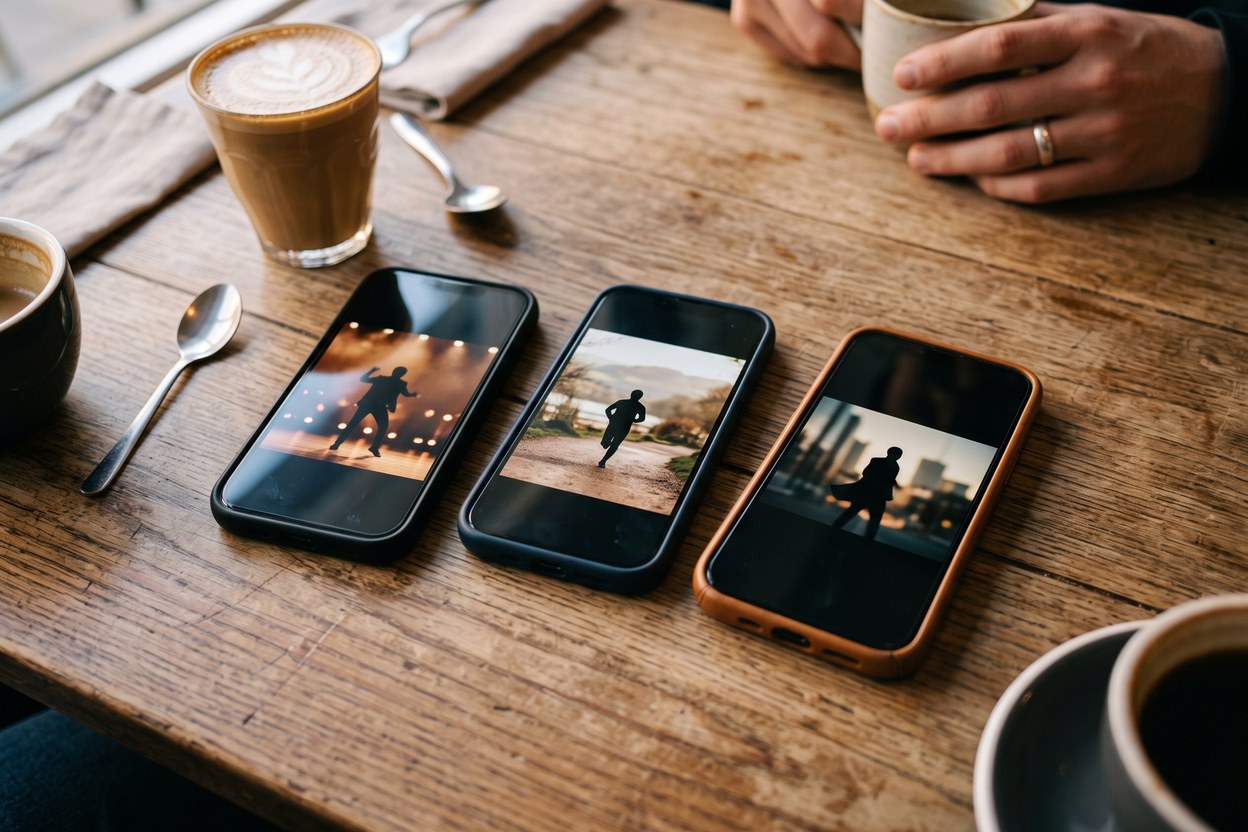
The AI video trend taking over social media in 2026 is motion transfer: people taking any viral clip — a dance, a movie scene, a meme — and regenerating it with themselves (or a friend, or a fictional character) as the performer, using nothing but a photo and the original video. If your feed is full of people starring in videos they demonstrably never filmed, this is why. It is the single most-shared AI format of the year, and unlike most AI trends, it is still accelerating rather than burning out.
What the trend actually looks like
The format has a few reliable shapes:
- The borrowed dance. A choreography trend breaks on TikTok, and within hours the sound is full of people performing it perfectly — office workers, grandparents, golden retrievers' owners — without a single rehearsal. The tell is the identical footwork; the appeal is exactly that.
- The movie-scene recast. An iconic scene, except the lead is now your mate Dave, rendered from three photos on his camera roll. Group chats produce these by the dozen; the best ones escape to the timeline.
- The impossible casting. Historical figures in gym fail compilations. Statues doing transitions. A company's mascot performing the founder's keynote. Anything where the comedy is the collision between the person and the motion.
- The self-upgrade. Creators recasting themselves into high-production footage — cinematic walks, fashion-week runways, sports highlights — to make a week's worth of polished content from one afternoon's reference clips.
Why it exploded now
None of the ingredients is new — face-swap apps have been around for years, and earlier motion-transfer tools produced wobbly, dreamlike results that read as a novelty. Three things changed in 2026:
- Identity stopped drifting. Current video models hold a face consistent through turns, fast motion and lighting changes — the failure that made earlier attempts obviously fake within a second. Multiple reference photos (up to eight on some tools) locked this in further.
- The motion got honest. Footwork, weight shifts and hand paths now track the reference clip instead of vaguely suggesting it. A copied dance is recognisably that dance, which is the entire joke and the entire appeal.
- The cost collapsed into impulse territory. A 5-second recast on Hermosso runs 1,000 credits at standard quality — inside the 400-credit free tier's reach for a first try, and a rounding error on a $9/month plan. When a format costs less than a coffee to join, everyone joins.
The engine has a name: Genjutsu
Most of the recast clips driving this trend run on one model: Genjutsu, built by Higgsfield. It is the engine that made identity-through-motion look real instead of rubbery, and it is the same engine inside Hermosso's Motion Transfer — so the clips you are seeing on your feed are, in most cases, exactly what our tool produces. The difference is the wrapper: Higgsfield's own interface is a pro tool with a pro learning curve, while Motion Transfer reduces the whole job to three steps — photo, clip, generate — with the price shown before you spend a credit. If you've been watching this trend and wondering where to start, that is the shortest way in. And if recasting is only the gateway and you end up wanting to animate stills, make talking videos or build clips from scratch, the full video creation suite is in the same account.
Why this trend has legs when others didn't
Most AI image trends are one-trick: once you've seen yourself as an action figure, you've seen everyone as an action figure. Motion transfer is structurally different because it rides on top of every other trend instead of being one. Every new dance, every new meme format, every viral scene is fresh source material — the recast layer reinvents itself each time the feed does. It is less a trend than a new way of participating in trends: you no longer need the skill, the location, the body or the budget the original required. You need a photo and ten minutes.
It also has an unusually healthy creator economy. The people who originate the dances and formats get their work amplified further than ever — a copied choreography still carries the original sound and, usually, the original creator's credit. Participation stopped being a competition with creators and became a multiplier for them.
How to join in (and do it well)
The how-to is covered step by step in our guide to making an AI video with your face in it, and the two techniques behind the format — recasting and restyling — are compared in how to recreate any video with AI. The short version: pick a clip with one clear performer, feed it and a sharp photo of yourself to Motion Transfer, draft at standard quality, render the winner at pro, and label it as AI when you post. The creators getting millions of views with this are not hiding the method — the transparency is part of the bit.
The line the fun stops at
The same technology pointed at a real person without their consent is the deepfake problem, and 2026 has already supplied the cautionary tales — our explainer on a viral AI fake of two real broadcasters shows how fast that curdles. The trend works precisely because it stays consensual: your face, your friends' faces with their blessing, fictional characters. Every platform removes the non-consensual version, a growing list of jurisdictions criminalises it, and — strategically, for anyone building an audience — the consent-based version is simply better content. Star in everything. Just make sure the star agreed to it.
Star in your first video today
One photo of you, one clip you love — Motion Transfer does the rest. New accounts get free credits, and a 5-second video costs less than a coffee.
Put yourself in a video →Frequently asked questions
What model is behind the AI recast video trend?
Most viral recast clips run on Genjutsu, Higgsfield's motion-transfer model. The same Genjutsu engine powers Hermosso's Motion Transfer tool, which offers it in a simpler interface — upload a photo and a clip, pick a quality tier, generate — with per-second pricing shown upfront in credits.
What is the AI video trend where everyone stars in videos?
It is motion transfer: an AI technique that takes a photo of a person and a reference video clip, then generates a new video where that person performs whatever happens in the clip. It powers the wave of self-cast dance videos, movie-scene recasts and memes filling TikTok and Reels in 2026.
How are people putting themselves in viral videos?
They upload a clear photo of themselves plus the viral clip to a motion-transfer tool. The AI copies the motion, timing and camera work from the clip and rebuilds the performer around the person's identity from the photo — no filming, dancing or editing required.
What app are people using for the AI recast trend?
Several tools offer motion transfer, including Hermosso's Motion Transfer, which accepts up to eight reference photos and clips of 4–30 seconds. A 5-second recast costs 1,000 credits at standard quality, and new accounts get 400 free credits to try it.
Why did AI recast videos suddenly get good in 2026?
Three things improved at once: video models learned to hold a face consistent through fast motion and turns, motion tracking began copying footwork and weight shifts faithfully instead of approximately, and the cost dropped to impulse levels — around 1,000 credits for a 5-second clip.
Is the AI video recast trend legal?
Yes when it is consensual — putting yourself, willing friends or fictional characters into clips. It becomes illegal in a growing number of jurisdictions, and removable under every major platform's policies, the moment a real, identifiable person is put into a video without their consent.
Do AI recast videos get labelled on social media?
They should be — TikTok, Instagram and YouTube all require or push AI-content disclosure, and the format's biggest creators label openly. Audiences treat the label as part of the joke rather than a confession, so transparency costs nothing and protects the account.