
The Arch Manning AI Video, Explained — and How to Spot a Fake
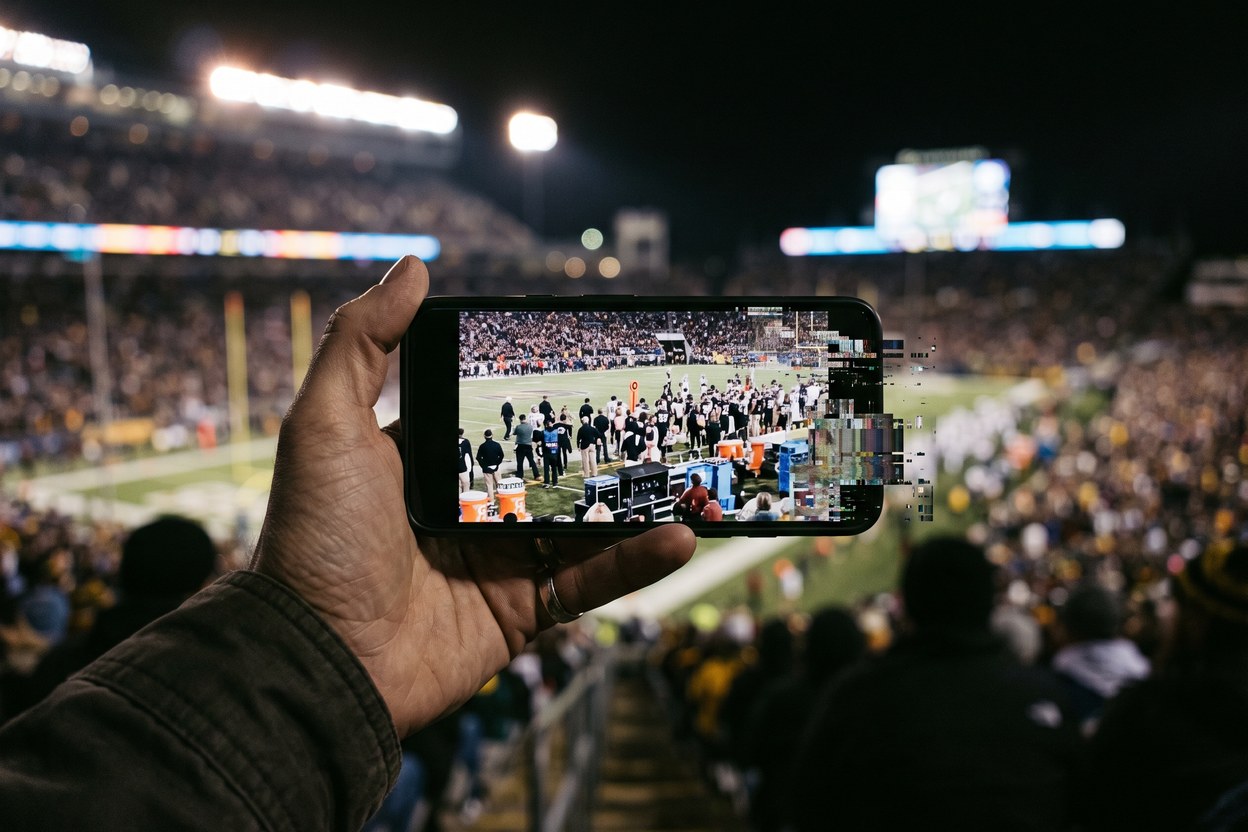
The Arch Manning AI video is an AI-altered clip that made Texas football coach Steve Sarkisian appear to slap ESPN sideline reporter Holly Rowe after a game — an incident that never happened. It spread across social media in mid-September 2026, and it became a bigger story when Texas quarterback Arch Manning laughed about it publicly, then apologised. This is what actually happened, why the fake was convincing, and how to check the next shocking clip before you share it.
What actually happened
The fake grew out of a real moment. After Texas's win over Ohio State, Holly Rowe tried to interview coach Steve Sarkisian on the field amid loud postgame celebrations. The exchange was brief and read as testy on live TV — Sarkisian repeated "Texas fight!" and said "Hook 'em!" before walking away — but it was entirely verbal, and Rowe simply carried on with her job.
Someone took that real broadcast footage and altered it with AI so that Sarkisian appears to shout "Hook 'em!" and then strike Rowe on the side of her face, knocking her to the ground. None of that occurred. The fabricated clip circulated widely on social media in the days after the game.
On Monday, September 15, at Texas's weekly media availability, Arch Manning was asked whether he had seen social media posts about the postgame celebration. He mentioned the fake clip, called it "hilarious" and laughed, and several others in the room laughed with him. A clip of those remarks then spread itself, and the reaction was swift: joking about a video depicting violence against a specific, named woman — a veteran reporter doing her job — drew widespread criticism.
On Tuesday, Manning apologised on Instagram: "I made an insensitive comment about an AI video. There is nothing funny about it. It's easy to say I didn't mean it, but I know my words and actions were hurtful to a lot of people. I do not take that lightly and am deeply sorry for that." He addressed Rowe directly: "I specifically want to apologize to Holly Rowe for what she personally had to deal with because of my comments. I have a ton of respect for her and appreciate her showing me grace in this moment."
Rowe responded publicly on X and Instagram, accepting the apology: "Thank you, Arch. I appreciate our conversation about this — which will remain private. Apology accepted. We move forward with respect and kindness for one another." The Association for Women in Sports Media backed Rowe and called on teams to educate players and staff, saying "the normalization of violence against women in any capacity is not acceptable." ESPN declined to comment. (Reporting via ESPN and the Associated Press.)
Why the fake convinced people
Two years ago a clip like this would have been obviously synthetic — waxy faces, melting hands, a dreamlike drift to everything. In 2026 the failure mode is different, and this incident shows why:
- It started from real footage. The faces, voices, stadium, lighting and camera work were all genuine broadcast video. Only a few seconds of action were changed. Every "tell" people are trained to look for in fully synthetic video was absent, because almost none of the clip was synthetic.
- It attached itself to something viewers had already seen. The real exchange had aired live and looked tense. The fake didn't ask anyone to believe a new event — it offered a worse version of an event they already half-remembered.
- It was engineered to be shared, not scrutinised. Short, loopable, emotionally charged, and mostly watched as a compressed, re-uploaded copy on a phone — the exact conditions that hide whatever artifacts remain.
- Even people close to the story believed it was fair game. The starting quarterback's first reaction was to laugh, not to doubt it. If the people in the building aren't stopping to check, nobody downstream of them will either.
How a video like this is made, technically
Deliberately at the level of understanding rather than instruction — the point is to know what you're looking at, not to make one.
The era of the full "deepfake" — training a model on a target's face and compositing it onto someone else's body, frame by frame — is largely over, because general-purpose video models got good enough to skip it. A clip like the Sarkisian–Rowe fake is typically an AI-assisted edit of real footage: you take the genuine broadcast clip, mask the region where the interaction happens, and have a video model regenerate just that region — or the few seconds around it — with a different action. Modern video models hold identity, clothing, lighting and camera motion consistent across the edit, because consistency across time is precisely what they are trained for. The audio track is the real broadcast audio, sometimes extended with a cloned voice for a word or two. Finally the clip is compressed and re-uploaded, which degrades it just enough to smear over any remaining seams.
The same generation stack — image-to-video, video-to-video restyling, motion transfer, lipsync — is what powers legitimate tools, including ours. The technology is not the scandal; pointing it at a real, identifiable person without their consent is.
How to spot an AI-generated or AI-altered video
No single check is decisive. Run several, and treat the source check as the strongest one:
- Find the original. If the clip claims to show a broadcast moment, the broadcaster's own footage is the reference. Here, the real Sarkisian–Rowe exchange had aired live — anyone who pulled up the actual postgame interview could see the slap wasn't in it. A fake that edits real footage can never survive comparison with the source.
- Watch the physics of contact. Impact is the hardest thing to fake: does the struck person's head, hair, clothing and balance react at the right instant, in the right direction? Fakes often show a hit that lands with no recoil, or a fall that starts a beat early.
- Watch the bystanders. Background people in regenerated regions tend to freeze, drift, or fail to react to something violent happening directly in front of them.
- Check hands and faces during fast motion. Pause and step through the busiest frames. Blur is normal; geometry changing between frames is not.
- Listen against the picture. Real audio laid over altered video drifts out of sync with lips and impacts. A shout that arrives before the mouth opens is a tell.
- Ask who posted it first. Trace the clip to its earliest upload, not the biggest account that amplified it. A shocking video that exists only as re-uploads — never from any outlet, team or person who was there — should be treated as unverified by default.
- Reverse-search a keyframe. A still from the video often surfaces the original footage or fact-checks within hours of a fake going viral.
What actually works: verification methods compared
| Check | What it catches | Where it falls short |
|---|---|---|
| Visual artifact hunt (hands, faces, physics) | Fully synthetic clips; sloppy edits | Nearly useless on a good edit of real footage — most of the frame is genuinely real |
| Comparing with the original broadcast | Edited real footage — the exact category this fake belongs to | Only works when a public original exists to compare against |
| Reverse keyframe search | Recycled or recontextualised clips; early fact-checks | Needs the fake to have spread far enough to be indexed or debunked |
| Metadata / content provenance (C2PA) | Clips from tools and cameras that sign their output | Most social re-uploads strip metadata entirely; absence of a signature proves nothing |
| AI detector tools | Output of models they were trained to recognise | False positives and false negatives both common; an edit of real footage often passes as real |
| Waiting for credible reporting | Everything, eventually | Useless in the first hours — exactly when sharing pressure is highest |
When this checklist won't help you
Honesty matters more than false confidence here, because this incident is a case study in the checklist's limits:
- It cannot prove a video is real. Finding no artifacts means "no artifacts found", not "authentic". Absence of evidence is the weakest signal on the list.
- It underperforms on exactly the fakes that travel furthest. The Sarkisian–Rowe clip was an alteration of real footage — the hardest category to catch visually. The check that actually broke it (the live broadcast existed) is a source check, not a video check.
- Compression hides the evidence. By the third re-upload, the resolution that would show you the seams is gone, and metadata went with it.
- Detectors are not verdicts. No automated tool's output should be your reason to accuse or to exonerate anyone. They disagree with each other too often for that.
- It cannot beat motivation. People share what they want to be true. When a clip matters — when a real, named person is accused of something — the only responsible move is to wait for the people involved or credible outlets to confirm it, and Rowe and Sarkisian both had every incentive and ability to say what really happened.
The line this crossed: consent
It is worth being direct about this, because we make AI video tools. Hermosso exists to transform your own photos and videos, with your consent: you upload your selfies, train a private model of your face, animate your own pictures, restyle your own footage. Making a fake video of a real, identifiable person without their consent — let alone one depicting violence against them — is exactly what this product is not for, and it is the use case every responsible tool in this space refuses to build for. In a growing number of jurisdictions it is also explicitly illegal, and platforms remove it.
If what you actually want is the legitimate version — putting yourself in a clip — Photo to Video animates your own photo into a short clip for 250–2,400 credits per 5 seconds depending on the engine, and our talking-photo guide covers turning a picture of yourself into a speaking video. New accounts get 750 free credits, and plans start at $9/month for 5,000 credits — see the pricing page for the full breakdown.
Try it on your own photos
Upload a few selfies, and Hermosso trains a private AI model of you — then generates studio-quality photos in any style. Your first credits are free.
Create your AI photos →Frequently asked questions
What is the Arch Manning AI video?
The Arch Manning AI video is an AI-altered clip of a real postgame sideline interview, edited so that Texas coach Steve Sarkisian appears to slap ESPN reporter Holly Rowe — an incident that never happened. It went viral in September 2026, and Arch Manning apologised after publicly laughing about it.
Did Steve Sarkisian actually slap Holly Rowe?
No. The slap exists only in the AI-altered version of the clip. The real postgame exchange between Sarkisian and Rowe after Texas's win over Ohio State was brief and entirely verbal, and Rowe continued working after it.
What did Arch Manning say about the AI video?
At Texas's media availability on Monday, September 15, 2026, Manning referenced the fake clip, called it "hilarious" and laughed. On Tuesday he apologised on Instagram, saying: "I made an insensitive comment about an AI video. There is nothing funny about it," and apologised to Holly Rowe directly.
How did Holly Rowe respond to Arch Manning's apology?
Holly Rowe accepted the apology in a statement posted on X and Instagram, writing: "Thank you, Arch. I appreciate our conversation about this — which will remain private. Apology accepted. We move forward with respect and kindness for one another."
How can you tell if a video is AI-generated or AI-altered?
The strongest check is finding the original source: if a clip claims to show a broadcast moment, compare it with the broadcaster's actual footage. Beyond that, look for contact physics that don't react, bystanders who freeze or fail to respond, lips and audio drifting out of sync, and a clip that exists only as anonymous re-uploads.
Can AI detector tools reliably identify fake videos?
No. AI video detectors are a useful signal but produce both false positives and false negatives, and they perform worst on the most dangerous category — real footage that has been partially altered. No detector's output should be treated as proof in either direction.
Is it illegal to make an AI video of a real person without consent?
In a growing number of jurisdictions, yes — many places now have laws covering non-consensual deepfakes, and defamation and right-of-publicity law can apply regardless. Major platforms also remove non-consensual fabricated videos of real people under their policies.
How much does it cost to make an AI video of yourself?
On Hermosso, animating your own photo into a 5-second clip costs 250–2,400 credits depending on the engine. New accounts get 750 free credits on signup, and plans start at $9/month for 5,000 credits.