AI Headshot Statistics 2026: 20 Numbers on Cost, Adoption and Detection
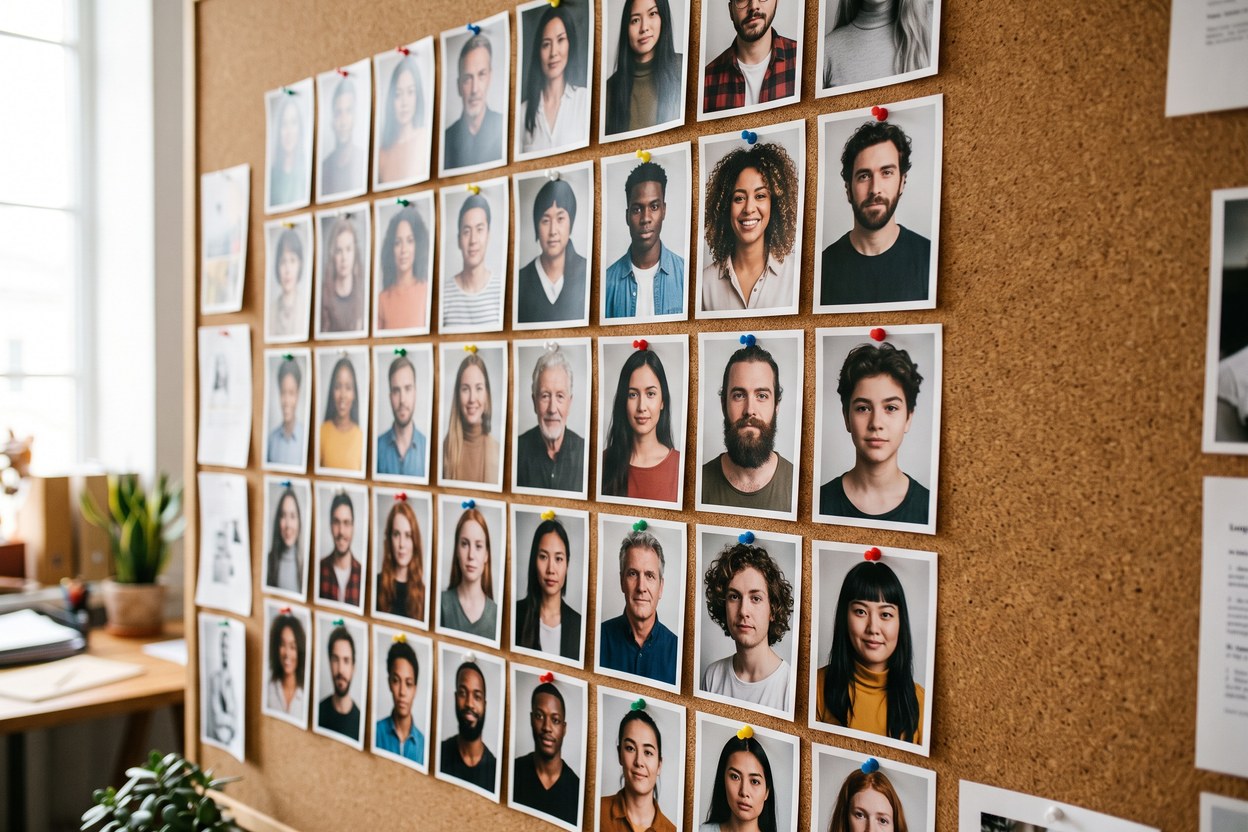
An AI headshot is a professional-style portrait generated by a model trained on your selfies — and in 2026 it sits in a strange spot: recruiters prefer them in blind tests, dislike them when told, and can't reliably tell the difference either way. This page collects the numbers behind that sentence, each with its source and date. Where a widely-quoted statistic can't be traced to a real study, it's in the last section — labelled unverified, because a statistics page that invents its numbers is worth nothing. (Disclosure: we build Hermosso, an AI photo platform; every external figure here is cited to its source so you can check it.)
What recruiters actually think
The anchor study here is Ringover's survey of 1,087 recruiters (June 2024), the largest recruiter-side test of AI headshots to date:
- 76.5% of recruiters preferred AI-generated headshots over real photos in blind preference tests.
- A top-tier AI headshot was chosen 42% of the time vs 23.5% for real photos — nearly double the pick rate.
- Recruiters correctly identified AI headshots only 39.5% of the time — worse than a coin flip — while 80% believed they had spotted them accurately.
- 66% would be put off by a candidate if they recognised the headshot as AI-generated.
- 88% believe AI headshot use should be disclosed — yet 84% would consider using one themselves. The double standard is the finding.
- 74.4% are more inclined to interview candidates whose profiles include a headshot; 67.5% have been put off by a bad one; half always check a candidate's LinkedIn.
Read together: a good headshot helps, an AI one helps more than most real ones — as long as it genuinely looks like you. The risk isn't AI, it's an uncanny or unrecognisable photo.
Can people actually detect AI faces?
- Humans classified AI-generated faces as real vs synthetic with 48% accuracy — below chance — in Nightingale & Farid's PNAS study (2022). Training improved detection only to 59%.
- The same study found synthetic faces were rated 7.7% more trustworthy than real faces on average.
- First impressions of a face form in about 100 milliseconds (Willis & Todorov, Psychological Science, 2006) — the photo is doing its work before anyone reads your headline.
What a headshot costs: photographer vs AI
- A professional headshot session averages $304 in the US, typically $216–$427 (Thumbtack pricing data, updated January 2025).
- Ringover's comparison put traditional headshot sets at $150–$450 against AI services ranging from free to $9.99 mid-range and $35 top-tier — a price gap of roughly 10–30×.
- As of September 2026, one-time AI headshot packages run $29–$79 (HeadshotPro, Aragon, BetterPic), while subscription suites start lower: Hermosso's Starter is $9/month for 5,000 credits — about 100 photos at 50 credits each — with 750 free credits on signup.
Adoption and market size
- 44% of US adults would consider using an AI headshot — Harris Poll survey of 2,000 adults, commissioned by PhotoPacks.AI (January 2025; vendor-commissioned, so read it as directional).
- The AI image generator market was estimated at $349.6M in 2023, reaching about $555.1M in 2026 and projected to hit $1.08B by 2030 — a 17.7% CAGR (Grand View Research).
- HeadshotPro, the category's volume leader, reports 17.9 million headshots generated for 196,000+ customers (self-reported company figure, 2026).
- In Canva's survey of 10,200 hiring managers and job seekers (January 2025), 57% of job seekers had used AI on application materials and 73% of hiring managers wanted that use disclosed.
- LinkedIn-reported figures, cited for a decade: profiles with a photo get 21× more views and 9× more connection requests. The original LinkedIn page no longer resolves, so treat it as folklore with a long pedigree rather than a live source.
The bias problem — the numbers nobody should skip
- In the Gender Shades study (Buolamwini & Gebru, 2018), commercial face-classification systems erred on 34.7% of darker-skinned women vs 0.8% of lighter-skinned men — the foundational evidence that face AI performs unevenly across skin tones.
- NIST's 2019 evaluation of 189 face-recognition algorithms found false-positive rates 10–100× higher for Asian and African American faces than for Caucasian faces in one-to-one matching.
- In July 2023, an AI headshot tool lightened an Asian MIT student's skin and turned her eyes blue when asked for a "professional" LinkedIn photo — the documented failure mode of generic generators that map "professional" onto a narrow template.
Why this happens matters for buyers: prompt-based generators synthesise a face from a text description of "professional", so drift is built in. Training-based tools work from your actual face across 10–20 photos — likeness, skin tone and features are anchored to the inputs rather than to a stereotype. It is the architectural difference between "a professional person" and "you, professionally photographed", and it is why we build Hermosso around personal models instead of one-shot prompts.
Numbers we could not verify
Citation hygiene is the point of this page, so: several widely-quoted figures — "58% of professionals have used AI headshots", a "$420M AI headshot market", a "$2.03B AI portrait market" — circulate on vendor blogs with no traceable primary report behind them. We looked; they appear to be copy-paste statistics invented somewhere upstream and amplified by roundups. If you cite AI headshot numbers, cite the studies above, not those.
What the numbers mean for you
The data points one direction: a strong headshot is worth having (74.4% interview lift), AI versions win blind comparisons (76.5%), detection is near chance (48% accuracy) — and the whole thing collapses only if the photo doesn't look like you (66% put-off). So the buying criteria write themselves: likeness first, disclosure where required, and a price that reflects a $304 photographer benchmark. Our AI headshot generator comparison applies exactly those criteria, with current prices; the LinkedIn headshot guide covers the platform-specific etiquette; and the team headshots guide handles the company-wide case.
Try it on your own photos
Upload a few selfies, and Hermosso trains a private AI model of you — then generates studio-quality photos in any style. Your first credits are free.
Create your AI photos →Made with Hermosso
Frequently asked questions
Do recruiters accept AI headshots?
In Ringover's 2024 survey of 1,087 recruiters, 76.5% preferred AI headshots over real photos in blind tests — but 66% said they would be put off if they recognised a headshot as AI-generated, and 88% believe the use should be disclosed.
Can recruiters tell if a headshot is AI-generated?
Recruiters correctly identified AI headshots only 39.5% of the time in Ringover's survey — below chance — even though 80% believed they had spotted them accurately; in Nightingale & Farid's PNAS study, general detection accuracy for AI faces was 48%.
How much does an AI headshot cost compared to a photographer?
A professional headshot session averages $304 in the US (Thumbtack, 2025), while AI headshot packages cost $29–$79 one-time at the major providers and subscription suites like Hermosso start at $9/month for about 100 photos — a price gap of roughly 10–30×.
How many people use AI headshots?
44% of US adults would consider using an AI headshot (Harris Poll, January 2025), 57% of job seekers used AI on application materials in 2024 (Canva), and the category's largest provider, HeadshotPro, reports 17.9 million headshots generated for over 196,000 customers.
How big is the AI headshot market?
The broader AI image generator market was estimated at $349.6M in 2023 and $555.1M in 2026, projected to reach $1.08B by 2030 at a 17.7% CAGR (Grand View Research); headshot-specific market figures circulating online have no verifiable primary source.
Do AI headshots work for all skin tones?
Not equally — the Gender Shades study found error rates of 34.7% for darker-skinned women versus 0.8% for lighter-skinned men in commercial face AI, and generic prompt-based generators have documented skin-tone drift; training-based tools that learn from your actual selfies anchor likeness to your real features instead.
Should I disclose that my headshot is AI-generated?
88% of recruiters believe AI headshot use should be disclosed (Ringover, 2024), and 73% of hiring managers want generative-AI use in application materials disclosed (Canva, 2025) — where a platform or employer asks, disclose; everywhere else, the photo simply needs to look like you.
Do LinkedIn profiles with photos really get more views?
LinkedIn has long reported that profiles with a photo receive 21× more views and 9× more connection requests — the original page no longer resolves, so treat it as well-established folklore, while Ringover's 2024 recruiter survey independently found 74.4% of recruiters more inclined to interview candidates whose profiles include a headshot.